
The Ashokan Watershed Stream Management Program’s latest publication is A Homeowners Guide to Managing Wood in Streams. The eight-page fact sheet explains the benefits and potential risks of downed trees and wood in streams. The guide describes how wood affects stream ecosystems, helps landowners determine whether wood is beneficial, and outlines best management practices for removal.
The guide is available for free download at the stream program’s website in accessible format https://ashokanstreams.org/publications-resources/.
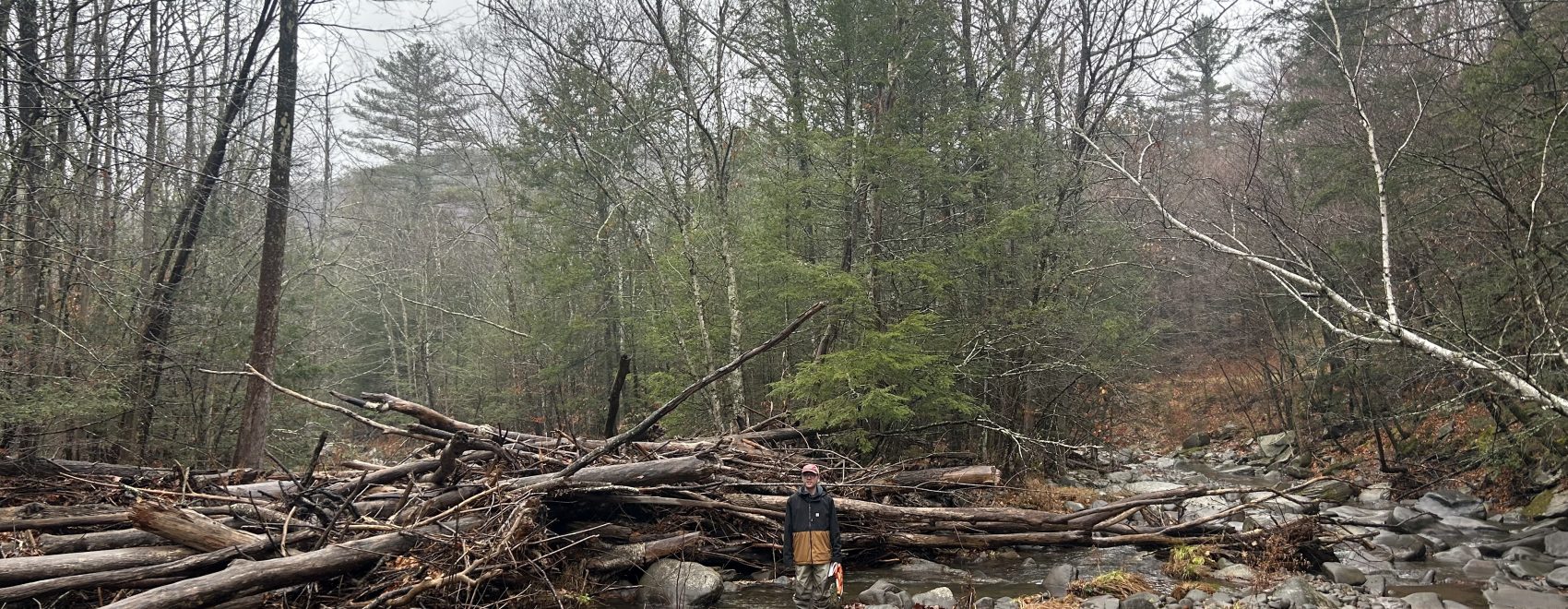
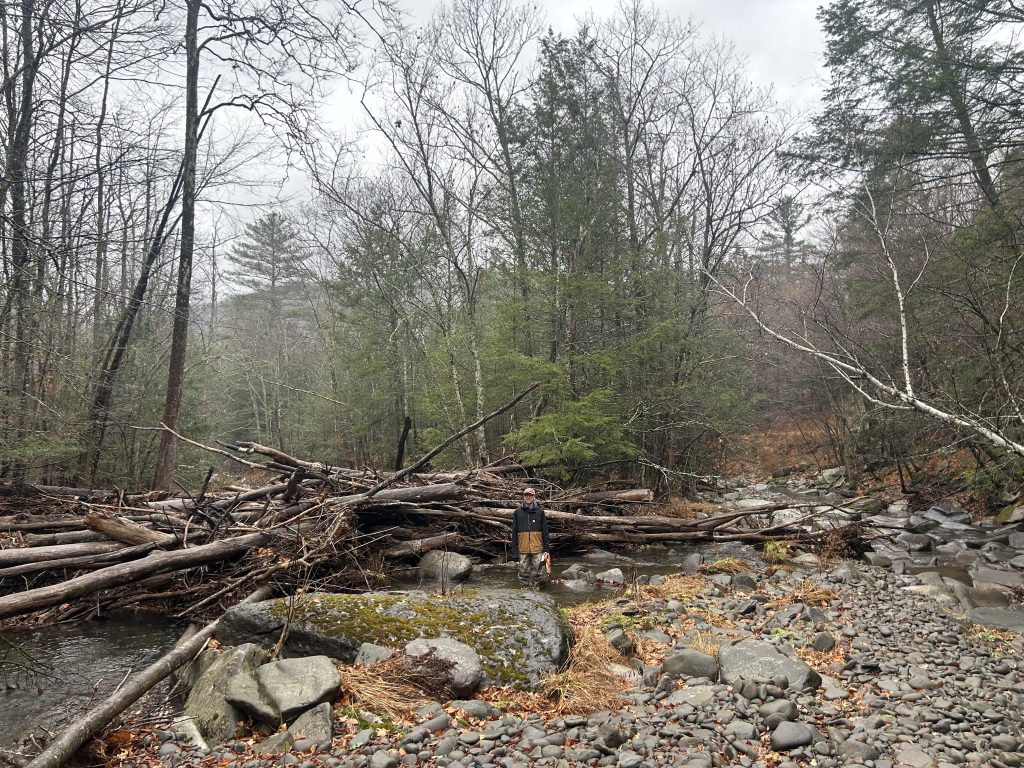
Many landowners in the densely forested Ashokan Watershed contact the AWSMP with questions about wood in streams on their properties. As trees die or fall, it is natural for wood to enter streams. Large trees can sometimes become lodged across a stream, trapping smaller pieces and forming what is known as a wood jam or log jam.
Wood jams often create beneficial habitat for fish and aquatic insects, providing cover from predators and forming deep, cool pools where fish can find refuge during hot summer months. The fact sheet also explains situations in which wood jams can contribute to flooding or erosion. These concerns are particularly relevant when wood jams occur near roads, homes, or bridges.
Landowners with questions about how to manage wood in their streams should contact their local Stream Management Program. Contact the AWSMP for information or a free site assessment at (845) 688-3047 or info@ashokanstreams.org. If you live outside the NYC Watershed, contact your local Soil and Water Conservation District.
Depending on the severity of the jam, wood removal may require a permit from the New York State Department of Environmental Conservation. The guide explains when a permit may be required and outlines important safety precautions for removal.
Read the Homeowners Guide to Managing Wood in Streams at https://ashokanstreams.org/publications-resources/.